Apartment Building Roofing in Queens
Trusted apartment building roofing in Queens, NY. Licensed roofing company, free estimates, quality workmanship. Call (917) 440-1800.
Our crews are dispatched from our Manhattan, NY headquarters and respond quickly to projects across Queens.
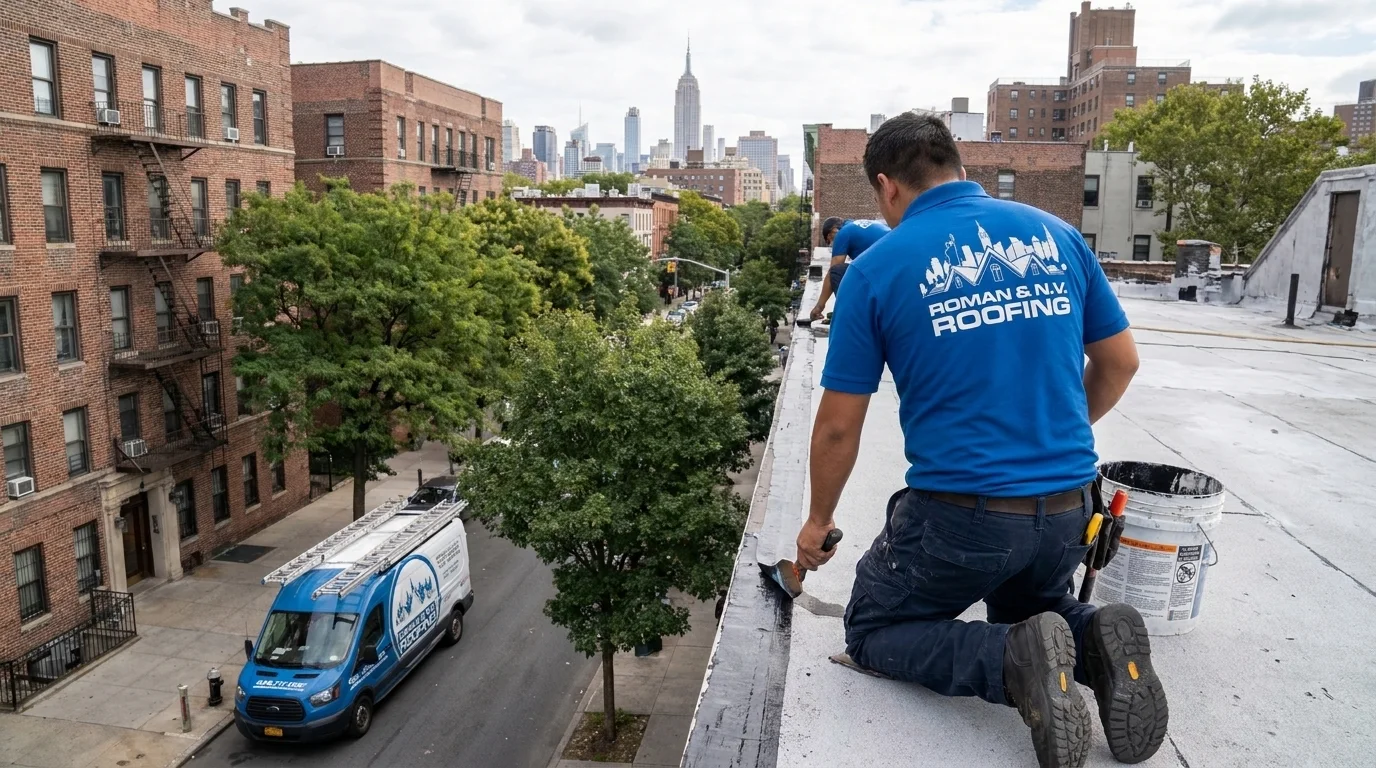
Queens is a borough of six-story walkups, prewar courtyard buildings, and postwar high-rises, and most of them share one thing above the top floor: a flat or low-slope roof that was never designed to last forever. In neighborhoods like Astoria and Forest Hills, apartment building roofs from the 1920s through the 1960s are reaching the end of their service life at roughly the same time, which means co-op boards, condo associations, and property managers across the borough are fielding leak calls, ponding complaints, and board meetings about roof budgets all at once. Roman NV Roofing works directly with building owners, co-op boards, and management companies on apartment building roofing, from targeted repairs to full replacement, sized to multifamily properties rather than single-family homes.
Why Queens Apartment Buildings See Roofing Issues
Most multifamily roofs in Queens are flat or low-slope by design, which puts drainage at the center of nearly every problem we see. Roof drains and scuppers clog with leaves and debris from street trees in neighborhoods like Jackson Heights and Flushing, and once water can’t get off the roof, it finds the weakest point in a membrane seam or a parapet wall flashing detail. Older built-up and tar-and-gravel roofs, common on prewar apartment buildings, develop alligatoring and blistering as the asphalt ages, and that damage is often invisible from the ground until a tenant on the top floor reports a ceiling stain. Buildings near Long Island City’s industrial corridors and waterfront blocks also deal with more wind-driven rain and temperature swings, which stresses membrane seams and rooftop penetrations around vents, HVAC curbs, and water tower supports faster than a sheltered interior block would.
Our Apartment Building Roofing Process in Queens
We start with a roof-level inspection that documents the membrane condition, drainage layout, parapet and flashing details, and any rooftop equipment that needs to be worked around, water tanks, cooling towers, antennas, and the like. From there we put together a scope that fits the building’s actual condition rather than a generic package: isolated repairs where the roof still has useful life, a recover or overlay where the deck and insulation are sound but the membrane is failing, or a full tear-off and replacement where the roof has reached the end of its service life. For replacement work we coordinate permit filings with the NYC Department of Buildings before any tear-off begins, since multifamily roof work in the five boroughs generally requires a permit on file. Material selection depends on the building: TPO and modified bitumen are common choices for Queens apartment roofs because they handle foot traffic and rooftop equipment well, and we size the drainage plan to the roof’s actual square footage rather than relying on the original 1950s layout.
Co-op and Condo Board Coordination
Apartment building roofing in Queens rarely has a single decision-maker. Co-op boards need bid documentation and a scope they can bring to a vote, condo associations often have reserve study requirements tied to roof age, and management companies need a schedule that doesn’t block elevator access or disrupt residents on upper floors. We put together proposals written for that audience, with a clear scope, material specification, and warranty terms the board can review before approving the work, and we schedule access and staging around the building’s loading dock, service elevator, or street parking restrictions rather than assuming a single-family driveway setup.
Local note
A detail that catches a lot of buildings off guard: many six-story Queens apartment buildings built before the 1960s have a single roof drain serving a much larger surface area than current code would allow, because the original design assumed lower-intensity rainfall than the borough now sees in summer storms. When we replace a roof on one of these buildings, we often recommend adding a secondary drain or overflow scupper even when it isn’t strictly required, since boards that skip this step tend to call us back after the next heavy storm with a ponding complaint instead of a dry roof.
If your building’s roof in Astoria, Forest Hills, Jackson Heights, Flushing, Long Island City, or anywhere else in Queens is overdue for an inspection or a board is weighing repair against replacement, Roman NV Roofing can walk the roof, document the condition, and put together a scope the board or management company can act on. Call (917) 440-1800 to schedule a visit.
Serving Queens from our Manhattan headquarters — ★ 5.0 · 168 Google reviews
“Reliable, honest, and professional roofing contractors. They kept us informed throughout the entire project.” — Nicholas, November 2026Read our reviews on Google →
Apartment Building Roofing in Queens: Service Coverage
Frequently Asked Questions
How does roof drainage design differ for older apartment buildings in neighborhoods like Astoria versus newer Queens construction?
Do co-op boards in Queens need anything specific before approving apartment building roofing work?
Are flat roofs on multifamily buildings in Jackson Heights and Flushing more prone to ponding water?
What roofing materials do you typically recommend for Queens apartment buildings?
Can you tell us whether our Long Island City building needs repair or full roof replacement?
Apartment Building Roofing in Queens
Our crews are based in Manhattan, NY and take on projects across Queens. Call for a free estimate.